
TenderU - Online video chat
TenderUSocial
3.071.00 Reviews
- Version
- 2.3.3
- Installs
- 10.00M
- Age Rating
- Mature 17+
Screenshots

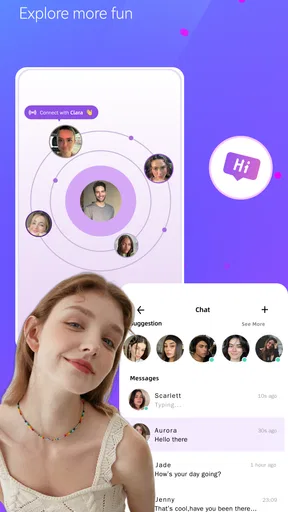
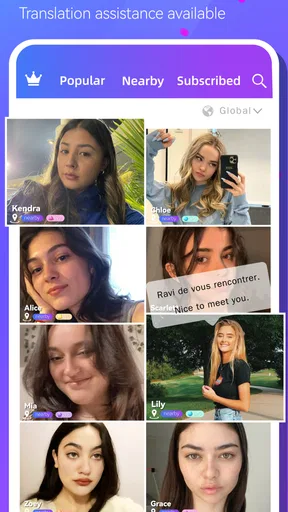
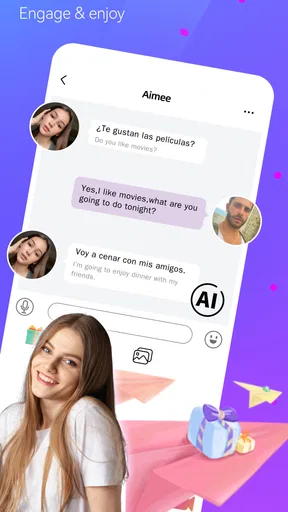
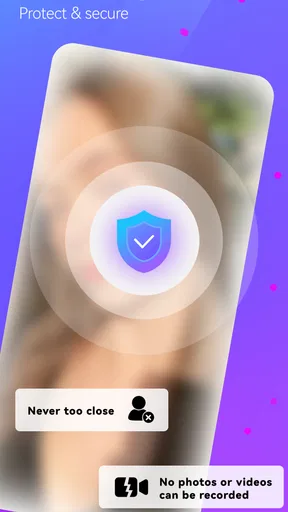
Our Review of TenderU - Online video chat
 Analysis by Appyee
I approached TenderU as a social app for people who want live, one-to-one video conversations rather than a feed filled with posts. Its purpose is easy to understand: open a camera-based space, meet people from different parts of the world, and decide whether the interaction is worth continuing. That simplicity is appealing, but it also means the quality of the experience depends heavily on the people you encounter, your comfort with spontaneous conversations, and how carefully you manage your time and spending.
The app comes from TenderU and is free to install, with optional purchases ranging from $0.99 to $99.99 per item. It is aimed at mature users aged 17 and over, which is an important part of the decision rather than a small label to ignore. I would not treat it like a general family chat tool or a casual messaging app for younger users. TenderU belongs in the more adult side of social discovery, where privacy, boundaries, and judgment matter from the first conversation.
What I would consider before choosing TenderU
My first decision criterion is the kind of social contact I actually want. If I am looking for a stable group of friends, a work call, or a conversation with someone I already know, a conventional messenger or community platform is usually more practical. TenderU makes more sense when the appeal is meeting unfamiliar people through video and accepting that some conversations will be brief, awkward, or unremarkable before one feels genuinely enjoyable.
The second criterion is comfort with being seen immediately. Text-based social apps give me time to think, edit, and decide how much personality to reveal. Live video removes much of that buffer. That can make a good exchange feel more natural, but it can also make a poor interaction feel more intense. I would choose TenderU only if I were comfortable ending a chat quickly, declining further contact, and protecting personal details without feeling pressured to be polite.
The third criterion is how much control I need over discovery. In a traditional social network, I can often browse profiles, read a conversation, or join a topic-based group before speaking. A video-chat service puts more weight on the moment itself. That is useful for users who dislike endless scrolling, but less suitable for anyone who wants a carefully filtered social environment.
The app has reached more than ten million installs, while its average rating sits at 3.0 from roughly sixteen thousand ratings. I read that combination as a reason to keep expectations measured. It shows that the concept has attracted a large audience, yet the middle-of-the-road rating suggests that downloading it is not the same as guaranteeing a consistently smooth or rewarding experience. I would judge it by whether its spontaneous video format matches my habits, not by its reach alone.
There is also a practical compatibility question. TenderU requires Android 6.0 or later, so many older Android phones may still be able to run it, but I would check the operating system before planning around it. The current version is 2.3.3. That information is useful when troubleshooting: if the app behaves poorly, I would first make sure the phone is supported and updated before assuming the service itself is at fault.
My first-session approach
If I were introducing a friend to TenderU, I would suggest starting with a short session rather than treating the first evening as a major search for connection. I would use a stable Wi-Fi connection, headphones if the surroundings were noisy, and a neutral background that does not reveal where I live. Those choices sound basic, but they make a noticeable difference in a service where the camera and microphone are central to the experience.
I would also decide on boundaries before opening a conversation. For example, I would avoid sharing my full name, workplace, school, address, private social handles, or travel plans during an early chat. If someone turns the conversation toward money, urgent favors, explicit requests, or moving immediately to another service, I would end it instead of trying to rescue the interaction. The best way to use a spontaneous video app is to stay curious without becoming careless.
A useful habit is to separate entertainment from expectation. I might open TenderU after work because I want ten minutes of light conversation in another language or a glimpse of how people elsewhere spend their evening. That is a realistic use case. I would be less happy if I opened it expecting the app to reliably produce a close friendship, a romantic relationship, or a carefully matched conversation every time.
Where TenderU is most convincing
The strongest part of the concept is immediacy. Instead of composing a profile essay or waiting for someone to reply, I can move directly toward a live human interaction. That makes the app feel more active than a conventional social feed. When a conversation works, the video format supplies small signals that text cannot: pauses, tone, facial reactions, and the natural rhythm of speaking.
This is especially useful for people who want low-commitment international contact. Someone practicing everyday English, preparing for a trip, or simply curious about life outside their own country may find more value here than in a polished profile network. I would not call it a formal language-learning tool, but live conversation can still be a practical way to become less nervous about speaking with unfamiliar people.
Another strength is that the app does not require me to build a large public identity before trying it. Some social platforms reward constant posting, profile maintenance, and visible engagement. TenderU is more focused on the encounter. For a person who does not want to curate a feed but does want to talk, that difference may be the main reason to choose it.
The mature audience positioning also helps set expectations. It signals that this is not an app I would hand to a child or recommend for casual family use. For adults who understand the social setting, the age classification can make the product feel more appropriately framed than a supposedly universal network where every type of user is mixed together.
In daily use, I would treat the first minute as a screening period. I would listen for whether the other person respects ordinary conversation, responds naturally, and accepts a simple boundary. If the exchange feels uncomfortable, I would leave promptly. If it is pleasant, I would still avoid assuming that a good first impression proves trustworthiness. This small workflow is more valuable than trying to force every match into a longer conversation.
How I would use it without wasting time
I would set a clear purpose for each visit. A short “meet someone new” session is different from a longer evening of social exploration, and knowing which one I want prevents the app from turning into aimless switching between conversations. If I had only a few minutes, I would leave quickly when the interaction was clearly not a fit. If I had more time, I would give a promising conversation enough room to develop naturally rather than judging it after a single awkward pause.
I would keep personal notes mentally rather than recording or capturing conversations. The point of the app is live contact, not collecting a private archive of strangers. I would also be cautious about moving a conversation elsewhere. A person may seem friendly in TenderU and still not deserve access to my other accounts. Keeping the interaction inside the app until trust is earned is a sensible trade-off between openness and privacy.
One non-obvious advantage of this approach is that it protects the social quality of the session. When I stop treating every contact as a possible long-term connection, I become more relaxed and less likely to overshare. The app works better as a series of small human encounters than as a high-pressure search for one perfect person.
Where the experience can become frustrating
The same immediacy that makes TenderU interesting can make it inconsistent. A live conversation cannot be edited after the fact, and not every person will communicate clearly, share the same expectations, or show the same level of courtesy. I would expect uneven sessions and would not interpret them all as a technical failure. Sometimes the format itself produces awkwardness.
Video also demands more from me than text. I need to think about lighting, background noise, appearance, and whether I am in a place where speaking aloud is appropriate. That makes TenderU less discreet than a messaging app. If I am commuting, sitting in a shared office, or looking for quiet interaction late at night, a text-first alternative may fit better.
There is a financial point to keep in mind as well. The app is free to install, but optional purchases can cost as much as $99.99 for an individual item. I would not spend until I understood exactly what a purchase changes in my experience and whether it solves a real problem for me. A free download can still become expensive if I buy repeatedly during an emotional or impulsive session.
I would set a personal spending limit before trying any paid option and avoid treating purchases as a shortcut to better social results. Paying may affect access or convenience, but it cannot guarantee that another person will be interesting, respectful, available, or compatible. That is a crucial trade-off: money may change the way I use the service, while the human outcome remains uncertain.
When another type of social app is a better fit
TenderU is not the obvious choice for every kind of connection. If I want to maintain relationships with relatives or close friends, a familiar messenger with dependable contact lists is better. If I want topic-based discussion, a community platform organized around interests may give me more control and more meaningful context before I speak. If I want dating with deliberate profiles and structured matching, a dedicated dating service may be more suitable than spontaneous video discovery.
For language practice, a purpose-built exchange platform could also be a stronger option because its users are more likely to share that specific goal. TenderU may provide authentic conversation, but I would need to create the structure myself. I might prepare a few simple questions, state that I am practicing, and accept that the other person may not be interested in teaching or correcting anything.
People who dislike cameras should probably skip it. The app’s central idea is not merely sending messages with a video option tucked away; the live visual interaction is what gives it character. Someone who prefers to remain anonymous for a while, communicate asynchronously, or carefully screen contacts will likely feel more comfortable elsewhere.
I would also steer away from it if I were easily pressured by social requests or in-app spending. The combination of quick encounters and optional purchases can encourage decisions made in the moment. A user who finds it difficult to say no, leave a conversation, or stop spending should choose a slower, more controlled social format.
That does not make TenderU poor; it makes it specialized. Its advantage appears when spontaneity is a feature. Its weakness appears when spontaneity feels like a loss of control. Comparing those two sides is more useful than simply asking whether the app is “good.”
What switching away would involve
The cost of switching depends on what I hoped to get from the app. If I only wanted occasional conversation, moving to text chat, interest groups, or a language exchange service would be simple. I would lose the immediacy of random video, but I might gain better filtering, more context, and a clearer reason for each conversation.
If I had already built contacts inside TenderU, switching would require deciding which relationships are worth continuing and which should remain inside the app. I would not automatically move everyone to another platform. A short, friendly video conversation is not enough evidence that someone should have access to my personal accounts. The inconvenience of starting again is smaller than the risk of giving away too much too quickly.
There is also a habit cost. TenderU can become an easy way to fill spare minutes, and replacing that routine may feel less exciting at first. I would ask whether I am actually gaining meaningful conversations or simply repeating the search for one. If the answer were mostly the latter, switching to a platform with topics, groups, or known contacts would probably improve my time even if it felt less spontaneous.
For anyone considering a paid purchase, I would make the decision before spending rather than after. Optional purchases should not become a reason to stay with an app that does not suit the way I communicate. A free trial of the basic experience, combined with a firm budget and a short evaluation period, is a more sensible test than paying first and hoping the service becomes more rewarding.
My recommendation for the right kind of user
TenderU is worth trying if I want live video conversations with people around the world, enjoy meeting strangers without a long preparation stage, and can handle inconsistent interactions with calm boundaries. Its social category is clear, its free entry lowers the barrier to testing it, and its large install base suggests that the format has broad appeal. I would approach it as spontaneous social discovery, not as a guaranteed friendship, dating, or learning solution.
I would recommend a cautious trial on a supported Android device, with privacy settings and spending choices considered before the first extended session. I would keep conversations short at the beginning, leave anything uncomfortable immediately, and avoid sharing identifying information. Those steps are not unnecessary paranoia; they are the practical habits that make an open video environment easier to enjoy.
I would skip TenderU if I need predictable contacts, strong topic filtering, private communication with people I already know, or a quiet text-based experience. In those cases, the usual alternatives are not merely safer or more familiar; they are better aligned with the job I need the app to do.
Released on June 16, 2022, and now at version 2.3.3, TenderU has had time to establish a recognizable place in the social-app landscape, but its 3.0 average rating tells me to keep the recommendation qualified. I see it as a niche tool for adults who genuinely enjoy spontaneous video contact. My recommendation is to try the free experience briefly, protect your privacy, and spend nothing until the format proves useful in your own routine. For the right person, that can be enough to make the app entertaining and surprisingly human; for everyone else, a more structured alternative will likely be the better choice.
Verdict
Strengths of TenderU - Online video chat
- Quick way to meet people through live video conversations.
- Video interaction can feel more personal than text-based messaging.
- Simple interface makes browsing profiles and starting chats easy.
- Useful for practicing communication and building social confidence.
- Available on mobile, allowing conversations wherever you have internet access.
Limitations of TenderU - Online video chat
- Some features may require in-app purchases or paid credits.
- Video calls can consume significant mobile data and battery power.
- The quality of conversations depends heavily on other users’ behavior.
- Privacy risks exist when sharing video, voice, or personal information.
- You may encounter inactive, fake, or unsuitable profiles despite moderation.
Similar Picks in This Category
View All
Meta Platforms, Inc.4.6

Instagram4.0

Likee-Live, Chat & Party Games
Likeme Pte. Ltd.4.4

Facebook Lite
Meta Platforms, Inc.4.5

TikTok - Videos, Shop & LIVE
TikTok Pte. Ltd.4.0

Moj: Free Short Drama & Reels
ShareChat4.1
Frequently Asked Questions
What is TenderU - Online video chat, and how does it work?
TenderU - Online video chat is a social communication app designed for meeting and chatting with people through video, voice, and text interactions. After creating an account, users can browse available profiles, start conversations, and potentially make new connections. The experience depends on the people online, the matching or discovery tools available, and the permissions granted to the app.
Is TenderU - Online video chat free to download and use?
The app may be available to download at no initial cost, but some features can require in-app purchases, credits, subscriptions, or other paid options. Video calls and premium communication tools may not always be included in the free experience. Before using paid functions, check the current pricing, renewal terms, and purchase details shown in the app store or inside the application.
Is TenderU safe and private for video conversations?
Users should treat TenderU like any online social or video-chat platform and avoid sharing sensitive information, passwords, financial details, or private documents. Review the app’s privacy policy and permission requests before signing up. It is also important to remember that other users may record, screenshot, or misuse conversations, even when an app provides reporting and blocking tools.
Can I control who contacts me on TenderU?
The available controls may include profile privacy settings, blocking, reporting, and options for managing notifications or unwanted messages. However, the exact tools can vary by app version, account type, and operating system. We recommend checking the safety and privacy sections after installation, blocking suspicious profiles immediately, and reporting harassment, scams, impersonation, or inappropriate behavior.
What should I check before downloading TenderU on Android or iPhone?
Before downloading TenderU - Online video chat, verify that your device meets the required operating-system version and has enough storage and a stable internet connection for video calls. Check the developer information, recent user reviews, permissions, subscription terms, and privacy disclosures. Because video communication can use significant mobile data and battery, Wi-Fi is often preferable for longer sessions.
